
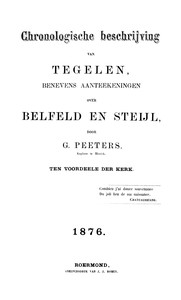
Chronologische beschrijving van Tegelen by Petrus Gerardus Peeters
Let’s be clear from the start: this isn’t a page-turning thriller. ‘Chronological Description of Tegelen’ is exactly what the title promises. Written by parish priest Petrus Gerardus Peeters between 1875 and 1883, it’s a year-by-year account of the major and minor events that shaped the Dutch village of Tegelen, stretching back to the 1300s. Peeters compiled it from church archives, government documents, and the spoken memories of the community’s oldest residents.
The Story
There’s no traditional plot. Instead, the ‘story’ is the life of a town unfolding in real-time across the pages. One entry might describe a devastating flood of the Maas River that wiped out crops. The next might note the year a new school was built, or record a particularly harsh winter. You’ll read about the arrival of the first steam engine, outbreaks of disease, the comings and goings of notable families, and the celebrations that marked the passing years. Peeters doesn’t just list events; he often adds a short note explaining why something mattered, giving you a sense of how people felt when it happened.
Why You Should Read It
You should read it for the intimacy. This book turns history from a dry list of dates into a collection of shared experiences. Peeters’s motivation is palpable—he’s not a distant academic, but a community member scared of losing the threads that connect people to their past. When he notes that a certain family donated a church bell, you sense the local pride. When he records a famine, you feel the community’s anxiety. It makes you think about what defines your own hometown. What stories would someone need to write down today to capture its essence? It’s a slow, reflective read that changes how you see the ordinary places around you.
Final Verdict
This book is a specialized treasure. It’s perfect for local historians, genealogy enthusiasts, or anyone with roots in the Limburg region. It’s also fascinating for readers who enjoy primary sources and want to see how history was recorded by someone living it. If you need a fast-paced narrative, look elsewhere. But if you’ve ever walked through an old part of town and wondered ‘what happened here?’, Peeters’s work offers a powerful answer. It’s a loving, detailed, and ultimately vital act of preservation, one page at a time.
No rights are reserved for this publication. Distribute this work to help spread literacy.
Jessica Lopez
11 months agoAs a long-time follower of this subject matter, the author clearly has a deep mastery of the subject matter. Highly recommended for those seeking credible information.
Karen Rodriguez
3 months agoI took detailed notes while reading through the chapters and it manages to maintain a consistent flow even when discussing difficult topics. Finally, a source that prioritizes accuracy over hype.
Robert Wilson
11 months agoThe formatting on this digital edition is flawless.
Karen Scott
1 year agoWow.








Sarah Thompson
1 year agoUnlike many other resources I've purchased before, the author’s unique perspective adds a fresh layer to the discussion. A rare gem in a sea of mediocre content.