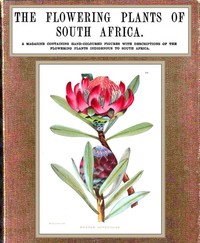
The flowering plants of South Africa; vol. 1 by I. B. Pole Evans
Let's be clear from the start: this isn't a novel. You won't find a thrilling plot with twists and turns. Instead, 'The Flowering Plants of South Africa' is a time capsule. Published in 1920, it's the first volume of a planned series documenting the region's incredible plant life.
The Story
The 'story' here is the mission. Botanist Illtyd Buller Pole-Evans, a key figure in South African agricultural science, led the effort to create this definitive record. The book came out in the shadow of the 1910s rinderpest pandemic and a catastrophic wheat rust fungus, events that hammered home how vital it was to understand local ecosystems. So, this volume, filled with detailed descriptions and stunning color plates of plants like proteas and ericas, was part of a larger push to map and protect South Africa's natural heritage. The narrative is one of careful observation, classification, and preservation.
Why You Should Read It
I love this book for its layers. On the surface, it's a beautiful artifact. The illustrations are works of art. But look deeper, and you feel the weight of history. This was science in service of a nation rebuilding. Pole-Evans and his team weren't just naming flowers; they were building a foundation of knowledge. The fact that it's often listed 'by Unknown' online adds a poignant layer—it reminds us how many crucial contributors to science fade from public memory. Reading it (or browsing it) feels like an act of recovery. You're giving attention to a foundational piece of work that was incredibly important in its day.
Final Verdict
This is a niche but rewarding pick. It's perfect for history of science enthusiasts, botanical art lovers, or anyone with roots in South Africa curious about early 20th-century natural history. It's not a cover-to-cover read for most, but a book to explore. Dip into the illustrations, read a few plant entries, and let yourself be transported to a 1920s field station. You'll come away with a real appreciation for the quiet, meticulous work that helps us understand our world.
This book is widely considered to be in the public domain. Distribute this work to help spread literacy.