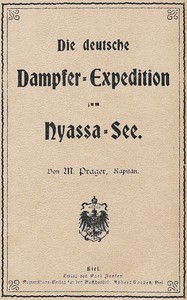
Die deutsche Dampfer-Expedition zum Nyassa-See. by Max Prager
Let me set the scene for you: Germany in the 1880s, caught up in the 'Scramble for Africa.' A group forms with the goal of establishing trade and influence around Lake Nyassa. Their brilliant plan? Get a steamship on the lake. The only problem? The lake is landlocked, hundreds of miles from the coast. So, they built a steamer named the Hermann von Wissmann, took it completely apart, packed every bolt and plate into hundreds of crates, and shipped it to the east coast of Africa.
The Story
This is where Max Prager, our author and engineer, comes in. His job is to get this mountain of parts from the Indian Ocean coast to the lake. The journey is a nightmare of logistics. They use ox-carts, boats, and hundreds of local porters in a caravan that stretches for miles. Prager describes it all: the brutal heat, the torrential rains that turn paths into rivers of mud, the constant battle with malaria and other diseases, and the sheer physical exhaustion of moving a factory's worth of metal through a landscape that was never meant for it. It's a blow-by-blow account of problem-solving on an epic scale. When they finally reach the lake and reassemble the ship, it feels like a miracle. But the story doesn't end there. Prager also gives us a snapshot of life on the lake, the people they met, and the fragile new world this steamship represented.
Why You Should Read It
You should read this because it strips away all the glossy myth of exploration. There are no grand speeches, just the daily grind of a massive, complicated job. Prager isn't a flashy writer; he's a practical man documenting a feat of engineering. That's what makes it so compelling. His focus on the how—how you motivate porters, how you repair a broken axle in the bush, how you keep morale up when everything is going wrong—is fascinating. It’s a story about human resilience and ingenuity, but it’s also an unflinching look at the colonial mindset. You see the ambition, the cultural arrogance, and the staggering impact of this foreign technology arriving in a distant place. It makes you think without ever feeling like it's lecturing you.
Final Verdict
This book is perfect for anyone who loves true adventure stories, but wants something more substantial than a simple tale of danger. It's for readers interested in the messy, complicated history of the colonial era, told from the ground level by someone who was there doing the work. If you enjoy narratives about epic journeys, engineering puzzles, or firsthand historical accounts, you'll be gripped. It's not a light read, but it's an incredibly rewarding one. You'll come away with a real sense of having been on that grueling, unforgettable trek yourself.
This masterpiece is free from copyright limitations. Preserving history for future generations.