
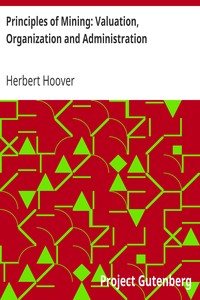
Principles of Mining: Valuation, Organization and Administration by Herbert Hoover
Okay, let's be clear from the start: Principles of Mining is a textbook. Herbert Hoover wrote it as a practical guide for engineers and managers. There is no plot in the traditional sense. Instead, the 'story' is the logical, step-by-step process of creating and running a successful mining enterprise in the early 20th century.
The Story
Hoover structures the book like a master class. He starts with the core question: How do you know if a pile of rock in the ground is worth the colossal expense of digging it up? He walks you through the art and science of mine valuation, from sampling ore to estimating costs. Then, he shifts to the massive challenge of organization—how to structure a company, manage finances, and handle the mind-boggling logistics of remote operations. Finally, he dives into administration: hiring and housing workers, ensuring safety (by the standards of the day), and maintaining machinery. The narrative is the relentless pursuit of efficiency and profit against a backdrop of immense physical and financial risk.
Why You Should Read It
You read this not for character arcs, but for a direct line into the mindset that built the modern industrial world. Hoover's voice is crisp, authoritative, and utterly confident. It's a peek behind the curtain at the raw mechanics of capitalism and globalization. You see how abstract concepts like 'supply chains' and 'capital investment' translate into railways snaking through mountains and towns springing up in the wilderness. It’s humbling and awe-inspiring. You gain a new appreciation for the physical foundation of our society—every piece of metal in your life started with the kind of brutal calculus described in this book.
Final Verdict
This isn't for everyone. If you're looking for a light narrative, look elsewhere. But if you have any interest in history, engineering, business, or economics, this is a unique primary source. It's perfect for the reader who loves old technical manuals, the person curious about the Gilded Age and the roots of American industry, or anyone who wants to understand the sheer scale and complexity of the world our grandparents built. Think of it as a historical documentary in book form, written by one of the chief architects of the era.
The copyright for this book has expired, making it public property. Use this text in your own projects freely.
Susan Martinez
3 months agoHaving read the author's previous works, the historical context mentioned in the early chapters is quite enlightening. Truly a masterpiece of digital educational material.
Patricia Anderson
9 months agoIf you're tired of surface-level information, the inclusion of diverse viewpoints strengthens the overall narrative. This has become my go-to guide for this specific topic.
Karen Martin
1 year agoA sophisticated analysis that fills a gap in the literature.
Charles Moore
6 months agoInitially, I was looking for a specific answer, but the wealth of information provided exceeds the average market standard. Finally, a source that prioritizes accuracy over hype.







Richard Johnson
5 months agoGiven the current trends in this field, the emphasis on ethics and sustainability within the topic is commendable. Finally, a source that prioritizes accuracy over hype.