About 555 minutes
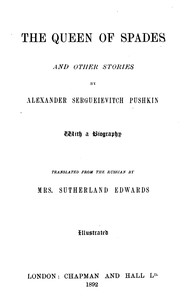
The Prose Tales of Alexander Pushkin — Reading Notes
Historical Psychological Social Fiction
127,635 recorded words. 381 minutes difference from this book's estimate.
View Gutenberg source #55219

Before opening Four Short Stories By Emile Zola — Themes and Context, the edition data offers a quick orientation: 215,075 words, 15 hr 36 min estimated reading time, and 30 detected text sections.
The text analysis averages about 16.5 words per sentence, while the detected sections provide another way to judge how the source is divided.
Project Gutenberg metadata also associates the work with “Short stories,” connecting these edition facts with the source record’s subject description.
Explore this collection
These alternatives are selected using recorded categories and estimated reading time.
About 555 minutes
Historical Psychological Social Fiction
127,635 recorded words. 381 minutes difference from this book's estimate.
View Gutenberg source #55219About 371 minutes
Historical Psychological Social Fiction
85,269 recorded words. 565 minutes difference from this book's estimate.
View Gutenberg source #71145About 357 minutes
Historical Psychological Social Fiction
82,034 recorded words. 579 minutes difference from this book's estimate.
View Gutenberg source #56878Search stored excerpts and compare books → Choose by your preferences →
Choices use stored catalog measurements. Estimates vary with reading speed. A shared category is a catalog label, not a claim that two books have the same argument or literary quality.
Search reads excerpt text stored with this catalog and links to its associated Gutenberg record. The connection is stored in the site database; this tool does not recheck that every excerpt is word-for-word identical to that external record. Excerpt search does not cover every chapter and does not verify historical publication dates.
Catalog snapshot checked: 2026-09-25. Coverage: 93 public books, 93 available source excerpts.
Calculated from edition completeness, EPUB availability, text structure and catalogue metadata. Not a user rating.
Total of 100 points, scaled to a 2.5-5.0 range. Editions with an empty description or a missing EPUB file are not scored.
Public-domain source text
The source text is kept in the dedicated reader, separate from this catalogue record and its commentary.
The opening of Nana immerses the reader in the half-empty Théâtre des Variétés at nine o'clock, where the dim luster, cardinal velvet, and green-tinted gaslight create a hushed, expectant atmosphere. The narrative immediately establishes a world of theatrical performance and social observation, as two young men, Hector and Fauchery, discuss the delayed start and the actress Clarisse. This attention to the physical space of the theater—the shadowy boxes, the unlit footlights, the scattered desks—suggests that Zola uses setting to mirror the characters' emotional states and the impending drama.
In the excerpt from Nana, the theater is not merely a backdrop but a character in itself. Zola describes the house as "half disclosed to view, as though full of a fine dust shed from the little jets of flame in the great glass luster." This meticulous rendering of light and shadow—the "subdued light" of the luster, the "utter night" of the lower boxes—creates a visual hierarchy that mirrors social stratification. The balcony and stalls are nearly empty, while the third gallery buzzes with calls and laughter from women and workmen in caps. The stage boxes, draped with scalloped hangings, remain untenanted, hinting at absent patrons of higher status. This spatial arrangement foreshadows the interplay of class and desire that drives the narrative.
Zola weaves a dense network of emotional and economic transactions among the characters. Rose Mignon, upon seeing Nana, breaks her usual silence to threaten violence: "if she tries the Steiner trick on again I'll tear her eyes out!" Her husband Mignon, however, remains calculating, having "drained his Muffat dry" and recognizing that Nana's hold over the count is absolute. The language of finance—"drained," "turn the situation to the best possible account"—permeates their interactions. Meanwhile, Count Muffat's internal turmoil is described as "the pain of an old wound" rather than immediate desire, a nuanced portrayal of obsessive love mixed with jealousy and self-blame. The excerpt reveals a world where passion is inseparable from power and money.
Zola's narrator moves fluidly between external observation and interior states. The description of Muffat's feelings—"he imagined that she would never have betrayed him if he had really loved her, and he blamed himself for this"—offers direct access to his self-deception. The narrator also employs a detached, almost clinical tone when noting that Fontan's "old love had turned to hate" and that he nursed "the fiercest rancor" due to his "perverse and monstrous tastes." This blend of naturalistic detail and psychological penetration is characteristic of Zola's method. Even minor characters like the attendant who addresses Fauchery by name contribute to a dense social fabric, where every gesture carries weight.
Although only Nana is excerpted, the table of contents reveals that the other three stories—The Miller's Daughter, Captain Burle, and The Death of Olivier Becaille—are each divided into multiple chapters, suggesting a similar attention to pacing and development. The titles hint at varied settings: a mill, a military context, and a deathbed. Readers may find it useful to compare how Zola adapts his observational style to different milieus, from the urban theater of Nana to the rural or domestic spaces implied by the other stories. The collection as a whole offers a cross-section of Zola's short fiction, with each piece likely exploring themes of power, desire, and social constraint.
Given that only the first story is represented in the excerpts, readers should approach the remaining three with an open eye for Zola's characteristic blend of precise description and psychological depth. The catalog subjects—"France -- Social life and customs"—are borne out in the theatrical world of Nana, but the other stories may expand this portrait. Pay attention to how Zola uses physical details to reveal character and social dynamics, a technique that likely unifies the collection.
Those Zola stories stayed with me—especially how his characters keep performing for each other, even when no one’s watching. It reminded me of something quieter I found later, in The Queen’s Twin and Other Stories — A Reader’s Guide, where the loneliness behind that kind of role-playing feels almost tender. I thought of it again this evening, just sitting here.
Build a private reading journal entry for this title.