About 225 minutes
The Queen's Twin and Other Stories — A Reader’s Guide
Historical Psychological Social Fiction
51,570 recorded words. 3 minutes difference from this book's estimate.
View Gutenberg source #24822
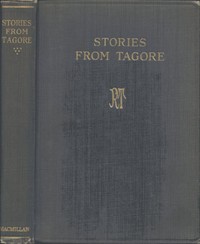
The source record for Stories from Tagore — Context and Discussion measures this digital text at 51,047 words, 3 hr 42 min estimated reading time, and 6 detected text sections.
The text analysis averages about 16.1 words per sentence, while the detected sections provide another way to judge how the source is divided.
Project Gutenberg metadata also associates the work with “India -- Social life and customs -- Fiction,” connecting these edition facts with the source record’s subject description.
Explore this collection
These alternatives are selected using recorded categories and estimated reading time.
About 225 minutes
Historical Psychological Social Fiction
51,570 recorded words. 3 minutes difference from this book's estimate.
View Gutenberg source #24822About 219 minutes
Historical Psychological Social Fiction
50,228 recorded words. 3 minutes difference from this book's estimate.
View Gutenberg source #74993About 229 minutes
Historical Psychological Social Fiction
52,562 recorded words. 7 minutes difference from this book's estimate.
View Gutenberg source #62030Search stored excerpts and compare books → Choose by your preferences →
Choices use stored catalog measurements. Estimates vary with reading speed. A shared category is a catalog label, not a claim that two books have the same argument or literary quality.
Search reads excerpt text stored with this catalog and links to its associated Gutenberg record. The connection is stored in the site database; this tool does not recheck that every excerpt is word-for-word identical to that external record. Excerpt search does not cover every chapter and does not verify historical publication dates.
Catalog snapshot checked: 2026-09-25. Coverage: 93 public books, 93 available source excerpts.
Calculated from edition completeness, EPUB availability, text structure and catalogue metadata. Not a user rating.
Total of 100 points, scaled to a 2.5-5.0 range. Editions with an empty description or a missing EPUB file are not scored.
Public-domain source text
The source text is kept in the dedicated reader, separate from this catalogue record and its commentary.
The excerpt from "The Castaway" reveals Tagore's method of building character through contradiction. Nilkanta, a former child actor, is described as "either a man too early or a boy too late," his face and age mismatched. Tagore traces how theatrical training has stunted him: his growth ceased at the height his manager required, and his lips show age while his eyes retain innocence. The narrative voice shifts between detached observation and speculative sympathy, noting that "his heart remained young, but the hot glare of publicity had been a forcing-house." This tension between artificial and natural development becomes the story's central concern.
The excerpt dwells on Nilkanta's ambiguous age and the forces that shaped him. Tagore writes that he "had lingered in a kind of unnatural youth" until the quiet shelter of Sharat's house allows nature to work. The detail that he once played Radhika, Damayanti, and Sita—heroines of Hindu mythology—underscores how performance has overwritten his own identity. His body bears the marks of a life where "eatings and beatings" were the norm, and beatings predominated. The narrative notes that no hair appeared on his face, deepening the confusion about his age. This physical description mirrors his social position: he is treated as a boy but feels shame when Kiran proposes he play a lady's companion. The story uses his changing body to signal an internal shift that no one else observes.
Nilkanta's attempt at education becomes a performance in itself. He sits with an open book, but the alphabet "did a misty dance before his eyes." When boats pass, he lifts the book and "shouts at the top of his voice," pretending to read. The audience gone, his energy drops. Tagore contrasts this outward show with genuine inner stirring: songs he once sang automatically now "stirred in his mind," though their words remain beyond his comprehension. The excerpt shows a character caught between two worlds—the theatrical troupe where he learned to mimic feeling, and the domestic sphere where genuine emotion begins to surface. His reading is a prop, but the longing behind it is real. The narrative leaves ambiguous whether he will ever bridge this gap.
The household of Sharat and Kiran provides Nilkanta with shelter, but it is not a simple haven. Sharat "had taken a cordial dislike to the boy" and boxes his ears; the factor cannot endure him because he is the pet of the master's wife. Kiran's playful proposal to dress him as a lady's companion reveals how even kindness can be misaligned with his changing sense of self. The garden beside the Ganges, where he sits with his book, offers a liminal space—neither fully part of the house nor outside it. The waves sigh, boats float past, birds flit above, but Nilkanta remains suspended between the roles he has played and the person he might become. Tagore uses this setting to mirror the character's internal stasis.
Readers attentive to the excerpt's details will notice how Tagore embeds social critique in physical description: the manager who controls Nilkanta's growth, the factor's jealousy, the wife's casual patronage. These small pressures accumulate, shaping a character who is neither child nor adult, neither actor nor student. The story rewards attention to such layered observations.
That grey afternoon I kept returning to Tagore’s quiet cruelties—the way public roles suffocate private longings. Nilkanta’s stunted pride stayed with me as rain blurred the window. Somehow that led to "Old Mary" 1901 — Inside the Classic, and I found the same tender ache there, merely lingering in a different century’s shadows.
Use these questions to collect your thoughts before moving on.