About 415 minutes
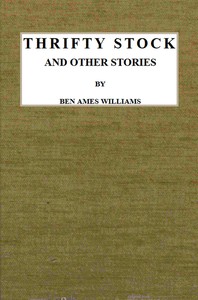
Thrifty Stock, and Other Stories — Reading Notes
Fantasy Juvenile Worlds
95,266 recorded words. 37 minutes difference from this book's estimate.
View Gutenberg source #63184
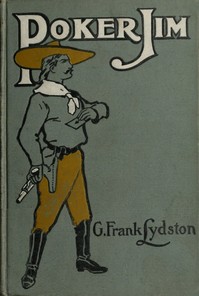
Poker Jim, Gentleman, and Other Tales and Sketches — Themes and Context can be approached with a clearer sense of reading commitment from its source measurements: 86,837 words, 6 hr 18 min estimated reading time, and 19 detected text sections.
The text analysis averages about 20.6 words per sentence, while the detected sections provide another way to judge how the source is divided.
Project Gutenberg metadata also associates the work with “Short stories, American,” connecting these edition facts with the source record’s subject description.
Explore this collection
These alternatives are selected using recorded categories and estimated reading time.
About 415 minutes
Fantasy Juvenile Worlds
95,266 recorded words. 37 minutes difference from this book's estimate.
View Gutenberg source #63184About 338 minutes
Fantasy Juvenile Worlds
77,592 recorded words. 40 minutes difference from this book's estimate.
View Gutenberg source #41317About 432 minutes
Fantasy Juvenile Worlds
99,283 recorded words. 54 minutes difference from this book's estimate.
View Gutenberg source #11392Search stored excerpts and compare books → Choose by your preferences →
Choices use stored catalog measurements. Estimates vary with reading speed. A shared category is a catalog label, not a claim that two books have the same argument or literary quality.
Search reads excerpt text stored with this catalog and links to its associated Gutenberg record. The connection is stored in the site database; this tool does not recheck that every excerpt is word-for-word identical to that external record. Excerpt search does not cover every chapter and does not verify historical publication dates.
Catalog snapshot checked: 2026-09-25. Coverage: 93 public books, 93 available source excerpts.
Calculated from edition completeness, EPUB availability, text structure and catalogue metadata. Not a user rating.
Total of 100 points, scaled to a 2.5-5.0 range. Editions with an empty description or a missing EPUB file are not scored.
Public-domain source text
The source text is kept in the dedicated reader, separate from this catalogue record and its commentary.
Lydston’s preface declares his characters are “all taken from life,” and the collection bears out that claim through a narrative voice that oscillates between clinical detachment and raw, colloquial immediacy. In “A Grim Memento,” the first-person narrator recounts a near-lynching with a breathless accumulation of sensory detail—“the feeble rays of a lantern,” the weight of a man “kneeling on my chest”—before slipping into a reflective, almost philosophical register: “A mob feels but it does not reason.” This tonal pivot, from visceral action to cool analysis, recurs across the volume, marking Lydston’s distinctive blend of the sensational and the meditative.
Lydston’s prose often adopts a vernacular that feels borrowed from barroom storytelling. In “Poker Jim, Gentleman,” the dialogue is clipped and idiomatic: “Jim, this yer’s Doc Weymouth.” The narrator’s own voice, however, frequently shifts into a more formal, almost clinical register—a habit Lydston himself acknowledges in the preface, noting that “the physician, who gets closer to things human than others do, may perhaps be forgiven unorthodox subjects and methods of expression.” This dual register creates an unsettling friction: the reader is simultaneously inside the action and observing it from a diagnostic distance. In “A Grim Memento,” the narrator describes his own mental state during the lynching attempt with detached precision: “My mind was never so acute as at that moment.” The effect is that of a man reporting his own vivisection.
The collection’s pacing is deliberately uneven, with long, winding sentences that suddenly snap into staccato bursts. In “A Grim Memento,” the narrator’s account of being dragged to a telegraph pole accelerates through short, declarative clauses: “A rope was speedily found and tied about my neck. A boy was ordered to climb the pole.” Then, just as abruptly, the prose expands into a sprawling, breathless paragraph of interior monologue: “But think!—My God! man, of what did I not think…” This rhythmic volatility mirrors the narrator’s own oscillation between helplessness and hyperawareness. Lydston also uses ellipses and dashes to simulate hesitation or interruption, as when the crowd’s shouts are rendered in fragments: “Hang him! Hang him!” The effect is a text that feels perpetually on the verge of losing control.
Across the excerpts, characters are repeatedly positioned at liminal spaces—windows, doors, thresholds—that mark moments of crisis or transition. In “A Grim Memento,” the narrator stumbles “over the threshold” into the arms of the mob; earlier, a woman identifies him “through the winder of our house.” The preface describes Tommy the Outcast entering “through a hole in my cellar window.” These thresholds become sites of vulnerability and misrecognition. Lydston’s use of the window as a framing device also suggests a voyeuristic quality: the reader, like the woman at the window, is granted a partial, distorted view. The motif reinforces the collection’s preoccupation with perception and misinterpretation—the narrator is mistaken for a bandit, the mob sees but does not reason.
Readers attentive to shifts in register will find Lydston’s collection a study in narrative instability. The stories reward a slow reading that lingers on the gaps between action and reflection, between the vernacular and the clinical. Pay particular attention to moments when the prose accelerates or breaks into fragments—these are where the collection’s tension between control and chaos is most acute.
Lydston’s world is all hard edges and dark grins, yet I find myself thinking of the softer glow in Lucy Maud Montgomery Short Stories, 1909 to 1922 — Reading Notes—how both writers, in their own way, catch people mid-stumble, just trying to get by. There’s a tenderness there, buried under the grit, that lingers long after the page turns.
Save your reaction, strongest insight, and memorable passage.