About 200 minutes
A Book — A Reader’s Guide
Fantasy Juvenile Worlds
45,940 recorded words. 0 minutes difference from this book's estimate.
View Gutenberg source #60904
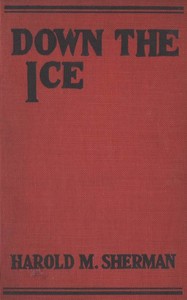
The catalog record for Down the Ice, and Other Winter Sports Stories — Story, Setting & Ideas provides practical reading context through 45,848 words, 3 hr 20 min estimated reading time, and 8 detected text sections.
The text analysis averages about 13.5 words per sentence, while the detected sections provide another way to judge how the source is divided.
Project Gutenberg metadata also associates the work with “Short stories,” connecting these edition facts with the source record’s subject description.
Explore this collection
These alternatives are selected using recorded categories and estimated reading time.
About 200 minutes
Fantasy Juvenile Worlds
45,940 recorded words. 0 minutes difference from this book's estimate.
View Gutenberg source #60904About 198 minutes
Fantasy Juvenile Worlds
45,373 recorded words. 2 minutes difference from this book's estimate.
View Gutenberg source #72231About 197 minutes
Fantasy Juvenile Worlds
45,177 recorded words. 3 minutes difference from this book's estimate.
View Gutenberg source #67647Search stored excerpts and compare books → Choose by your preferences →
Choices use stored catalog measurements. Estimates vary with reading speed. A shared category is a catalog label, not a claim that two books have the same argument or literary quality.
Search reads excerpt text stored with this catalog and links to its associated Gutenberg record. The connection is stored in the site database; this tool does not recheck that every excerpt is word-for-word identical to that external record. Excerpt search does not cover every chapter and does not verify historical publication dates.
Catalog snapshot checked: 2026-09-25. Coverage: 93 public books, 93 available source excerpts.
Calculated from edition completeness, EPUB availability, text structure and catalogue metadata. Not a user rating.
Total of 100 points, scaled to a 2.5-5.0 range. Editions with an empty description or a missing EPUB file are not scored.
Public-domain source text
The source text is kept in the dedicated reader, separate from this catalogue record and its commentary.
The opening of Down the Ice, and Other Winter Sports Stories drops readers directly into a hockey game: Carl Hemmer, Taber High’s star, charges down the ice, his skates throwing “a fine spray of ice” as he splits the defense. The prose is breathless, full of exclamations and short, punchy sentences that mirror the speed of play. Spectators are on their feet, and the narrator notes that hockey has become “the town’s most popular sport” thanks to Carl’s exploits. This initial story establishes a pattern of intense, physical competition and individual heroics.
The second excerpt, from the story “In Wrong Right,” marks a sharp tonal shift. The setting moves from the rink to a neighborhood prank: a group of Sophomores plot to duck a Freshman named Eddie in a watering trough on a cold night. The narrator, Ralph, is reluctantly chosen as the lure. The language becomes colloquial and self-deprecating—“I’d a lot rather have been one of the dousers”—and the humor relies on exaggerated plans and nervous anticipation. The contrast between the hockey story’s straightforward action and this tale’s scheming dialogue shows Sherman’s range within the collection.
Ralph’s narration in “In Wrong Right” is distinctive. He uses phrases like “a nice howdy do” and describes Eddie’s resemblance to Doug Fairbanks as “the only resemblance I could see was that Doug and Eddie both belonged to the human race.” This wry, conversational tone gives the story a personal feel. The reader is inside Ralph’s head, sharing his reluctance and his relief when Eddie cancels due to “sickness in the family.” The dialogue is peppered with period slang—“B-r-r-r!” and “liquid refrigerator”—that grounds the story in its 1930s setting.
Winter is not just a backdrop but an active element in both excerpts. In the hockey story, the ice is described as a surface that yields “a fine spray” and allows Carl’s dazzling maneuvers. In the prank story, the cold is palpable: “It was cold enough to wear an overcoat,” and the watering trough is a “liquid refrigerator.” The dark night, with “huge pine trees” and dim arcs, creates a stage for the planned ducking. Sherman uses these details to heighten tension—the physical cold mirrors the characters’ nervousness and the stakes of their actions.
The first excerpt is all action: Carl’s dash, the collision, broken sticks. The second excerpt is all buildup: the planning, the hesitation, the anticlimax. This structural contrast suggests that Sherman varies his storytelling approach across the collection. The hockey story relies on rapid, visual description, while the prank story builds suspense through dialogue and internal monologue. Readers encountering the book for the first time might note how the pacing shifts from story to story, and how Sherman balances high-energy sports sequences with more character-driven, humorous episodes.
These excerpts reveal a collection that moves between adrenaline-fueled competition and lighthearted schoolboy schemes. Sherman’s strength lies in capturing the voice of his young narrators—whether it’s the determined Carl or the reluctant Ralph—and in using winter settings to amplify both danger and comedy. Readers should expect a mix of tones and a focus on camaraderie, rivalry, and the physical thrill of cold-weather sports.
I remember Sherman’s ice-bound pranks, the snow muffling every shouted joke, and how their heat somehow kept the cold at bay. That same wrestling with stillness crept into my mind afterward, though—a quieter kind of hockey, played on the bed of sleep. It made me think of The somnolence of Somers — Reading Notes, where rest feels just as mischievous and deep as any rushing rink.
Capture what you thought, learned, and would like to remember.