About 186 minutes
Masterpieces of Adventure—Adventures within Walls — Themes and Context
Adventure Picaresque Fiction
42,777 recorded words. 9 minutes difference from this book's estimate.
View Gutenberg source #63016
The source record for Twilight Stories — Background and Themes measures this digital text at 40,507 words, 2 hr 57 min estimated reading time, and 5 detected text sections.
The text analysis averages about 21.2 words per sentence, while the detected sections provide another way to judge how the source is divided.
Project Gutenberg metadata also associates the work with “Children's literature,” connecting these edition facts with the source record’s subject description.
Explore this collection
These alternatives are selected using recorded categories and estimated reading time.
About 186 minutes
Adventure Picaresque Fiction
42,777 recorded words. 9 minutes difference from this book's estimate.
View Gutenberg source #63016About 163 minutes
Adventure Picaresque Fiction
37,437 recorded words. 14 minutes difference from this book's estimate.
View Gutenberg source #34884About 191 minutes
Adventure Picaresque Fiction
43,816 recorded words. 14 minutes difference from this book's estimate.
View Gutenberg source #63015Search stored excerpts and compare books → Choose by your preferences →
Choices use stored catalog measurements. Estimates vary with reading speed. A shared category is a catalog label, not a claim that two books have the same argument or literary quality.
Search reads excerpt text stored with this catalog and links to its associated Gutenberg record. The connection is stored in the site database; this tool does not recheck that every excerpt is word-for-word identical to that external record. Excerpt search does not cover every chapter and does not verify historical publication dates.
Catalog snapshot checked: 2026-09-25. Coverage: 93 public books, 93 available source excerpts.
Calculated from edition completeness, EPUB availability, text structure and catalogue metadata. Not a user rating.
Total of 100 points, scaled to a 2.5-5.0 range. Editions with an empty description or a missing EPUB file are not scored.
Public-domain source text
The source text is kept in the dedicated reader, separate from this catalogue record and its commentary.
The collection opens with Susan Coolidge's poem "Christmas Day," which pairs solemn religious imagery—"The Christmas chimes are pealing high / Beneath the solemn Christmas sky"—with a swift turn to a comic scene of children fleeing an elephant in a parade. This juxtaposition of reverent and mischievous tones recurs throughout the volume. The second piece, "The Only Woman in the Town," retells Paul Revere's ride with a precise, almost documentary style: "One hundred years' and one ago, in Boston, at ten of the clock one April night." The narrative then pivots to an untold story about a woman, signaling that the collection values both historical drama and overlooked perspectives.
The excerpts show a strong vein of patriotic poetry, such as "The American Flag" and "Barbara Frietchie," alongside humorous domestic scenes. In "Dixie and Yankee Doodle," the speaker, a former Confederate soldier now in a Union uniform, hears both anthems and grasps a comrade's hand: "'Yankee Doodle' ain't so bad." This moment of reconciliation is undercut by the earlier, more jingoistic lines: "I was but a country youngster / When I donned a suit of gray." The collection does not shy from war's emotional weight, but it also includes light verse like "The Barefoot Boy," which celebrates a child's freedom with "blessings on thee, little man." The tone shifts rapidly, so readers should expect whiplash between solemnity and whimsy.
Several poems adopt animal perspectives. William Cullen Bryant's "Robert of Lincoln" gives the bobolink a boastful voice: "Bob-o'-link, bob-o'-link, Spink, spank, spink; / Never was I afraid of man." The poem traces the bird's life from carefree singing to sober parenting, then to a "humdrum crone" as summer wanes. The repeated "Chee, chee, chee" refrain mimics actual bird calls. In contrast, "Little Brown Thrushes" presents a modest, nun-like bird with "one weak chirp." The collection also includes a dancing bear and a game of marbles interrupted by a baby. These pieces use simple rhyme and repetition, making them suitable for reading aloud, but they also embed observations about animal behavior and seasonal change.
The excerpts often begin in medias res or leave events unresolved. "The Only Woman in the Town" breaks off mid-sentence: "It is, how one littl..." This truncation, likely due to the excerpt's limits, mirrors the collection's tendency to offer fragments rather than complete narratives. Similarly, "The Soldier's Reprieve" and "The Story of the Empty Sleeve" are listed in the contents but not excerpted, hinting at war-related tales that may remain open-ended. The poem "U. S. Spells Us" ends with a child's puzzled observation: "And papa tries to smile at me / And can't—I wonder why." The reader is left to infer the father's impending departure for war. These gaps invite readers to imagine what happens next, making the collection feel like a series of vignettes rather than a closed book.
The collection showcases a wide range of metrical forms, from the limerick-like opening "We went to the show one night" to the anapestic lilt of "A dancing Bear came down the street." Several poems include refrains or nonsense syllables, such as "Riggity-rig, Dance a jig" and "Bob-o'-link, bob-o'-link." These invite chanting or singing. The prose pieces, like "The Only Woman in the Town," use rhythmic repetition: "At ten... At eleven... At mid-night." This oral quality suggests the stories were intended to be read aloud, perhaps in a family or school setting. The mix of dialects—Southern, childlike, and formal—adds to the performative range. Readers may find it useful to read these pieces aloud to appreciate their sonic texture.
Because the excerpts represent only a fraction of the full collection, readers should approach each piece as a self-contained unit rather than expecting a unified plot. The volume's strength lies in its variety: a patriotic poem may be followed by a nonsense rhyme about a dancing bear. Pay attention to shifts in tone and perspective, and note how the same themes—war, childhood, nature—recur in different keys. The editorial note in the Project Gutenberg file credits David Widger and Charles Keller, but the original authors remain the primary voices.
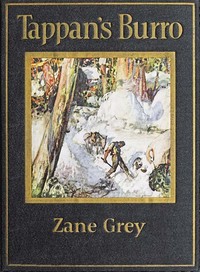
That rainy afternoon, Twilight Stories carried me through Paul Revere’s clatter and quiet fables, until the glow of one domestic scene lingered past the final page. Later, browsing shelves half-asleep, my hand found Tappan's Burro, and Other Stories — Edition Insights — same era, same unhurried warmth, as if the old book had nudged me toward a kind companion.
Answer a few questions and save a private reflection on this device.