About 210 minutes
Masterpieces of Adventure—Stories of Desert Places — Background and Themes
Adventure Picaresque Fiction
48,270 recorded words. 7 minutes difference from this book's estimate.
View Gutenberg source #63014
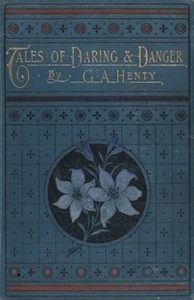
This digital edition of Tales of Daring and Danger — Reading Companion is described by source-level measurements including 49,878 words, 3 hr 37 min estimated reading time, and 6 detected text sections.
The text analysis averages about 16.7 words per sentence, while the detected sections provide another way to judge how the source is divided.
Project Gutenberg metadata also associates the work with “Children's stories, English,” connecting these edition facts with the source record’s subject description.
Explore this collection
These alternatives are selected using recorded categories and estimated reading time.
About 210 minutes
Adventure Picaresque Fiction
48,270 recorded words. 7 minutes difference from this book's estimate.
View Gutenberg source #63014About 194 minutes
Adventure Picaresque Fiction
44,449 recorded words. 23 minutes difference from this book's estimate.
View Gutenberg source #68920About 191 minutes
Adventure Picaresque Fiction
43,816 recorded words. 26 minutes difference from this book's estimate.
View Gutenberg source #63015Search stored excerpts and compare books → Choose by your preferences →
Choices use stored catalog measurements. Estimates vary with reading speed. A shared category is a catalog label, not a claim that two books have the same argument or literary quality.
Search reads excerpt text stored with this catalog and links to its associated Gutenberg record. The connection is stored in the site database; this tool does not recheck that every excerpt is word-for-word identical to that external record. Excerpt search does not cover every chapter and does not verify historical publication dates.
Catalog snapshot checked: 2026-09-25. Coverage: 93 public books, 93 available source excerpts.
Calculated from edition completeness, EPUB availability, text structure and catalogue metadata. Not a user rating.
Total of 100 points, scaled to a 2.5-5.0 range. Editions with an empty description or a missing EPUB file are not scored.
Public-domain source text
The source text is kept in the dedicated reader, separate from this catalogue record and its commentary.
In the opening story, Colonel Hastings dismisses his niece's pity for a captive bear by revealing the animal's lethal reputation: "any experienced sportsman will tell you that hunting those little bears is as dangerous a sport as tiger-hunting on foot." This tension between appearance and reality recurs across the collection. A young officer in the same tale survives a bear attack that leaves "scars on my shoulder and arm still," while later, a British naval lieutenant leads a boarding action against Chinese junks, where the enemy's "drums and gongs were furiously beaten" but their shot "whistled far overhead." Henty repeatedly sets up expectations—of harmless animals, of trapped crews—only to invert them through sudden violence.
The collection opens not with action but with a social scene: officers and ladies in a Poonah verandah, smoking cheroots after tiffin. Miss Hastings, newly arrived from England, voices a common civilian assumption—that the tied-up bear is "the most wretched little thing"—prompting the colonel's corrective tale. This frame device recurs: the narrator steps back to let a veteran speaker recount his own past danger. The effect is twofold. First, it establishes a contrast between domestic comfort and remembered peril, the verandah's cane chairs versus the Ghauts' rocky slopes. Second, it makes the reader a silent member of the listening party, invited to share the colonel's grim smile. Henty uses these frames to justify the stories' instructional tone: the veteran's experience becomes a lesson for the naive listener, and by extension, for the young reader.
Henty's action sequences depend on precise technical details. In the Chinese pirate episode, the British boats face "a scattering fire of gingals and matchlocks," then four cannons fired from a bank of rushes. The response is methodical: sailors "lash their rigging to ours and spring on board them." The author names specific weapons—gingals, matchlocks, the pinnace's smashed side—and describes their effects: "a ball struck the pinnace, smashing in her side." This specificity grounds the danger in material reality rather than vague peril. Similarly, the bear hunt in the first tale hinges on the animal's unexpected speed and ferocity, not on exotic setting alone. By itemizing arms and their consequences, Henty makes each encounter feel both authentic and instructional, as if the reader is learning the practical rules of survival in hostile terrain.
The settings shift from the Deccan plateau to Chinese rivers, but share a quality of hidden threat. Poonah in 1855 is "not so settled" due to "outbreaks of Dacoity," and the colonel's bear hunt occurs "within a few miles from here." The Chinese creek conceals "four or five junks" that emerge from a side channel, turning a pursuit into a potential trap. Henty maps danger onto geography: the bear's lair among rocks, the pirates' village up a concealed passage. Even the verandah, ostensibly safe, is the site where danger is recalled and re-experienced through narrative. This layering of peaceful surface and violent substratum gives the collection a consistent texture: the reader, like the characters, learns that the landscape cannot be trusted, and that every apparent refuge may conceal an ambush.
Readers attentive to Henty's craft will notice how he balances exposition with action, often letting a single scar or a smashed boat stand for a larger history. The stories reward those who track the recurring motifs: the underestimated adversary, the sudden reversal, the veteran's wry authority. Because the excerpts offer only portions of each tale, the full arc of the dacoit plot and the fate of the Chinese junks remain unresolved here, inviting the reader to complete the journey through the complete text.
There’s something about G. A. Henty’s exactness—the weight of a pistol, the height of a ridge—that makes those old dangers feel almost touchable, yet safely distant. I sometimes think the quieter threats linger longer, though. That shadowy feeling, the thing half-seen between the dacoits and the sea battles, brings me back to The Shadowy Third, and Other Stories — Reading Notes, where the unease stays after the page turns, like a half-remembered walk home.
Capture what you thought, learned, and would like to remember.