About 191 minutes
Masterpieces of Adventure—Oriental Stories — A Closer Reading
Adventure Picaresque Fiction
43,816 recorded words. 3 minutes difference from this book's estimate.
View Gutenberg source #63015
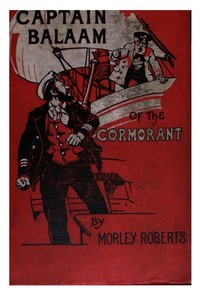
For Captain Balaam of the 'Cormorant', and other sea comedies — Text and Context, the stored edition analysis reports 44,449 words, 3 hr 14 min estimated reading time, and 4 detected text sections.
The text analysis averages about 14.6 words per sentence, while the detected sections provide another way to judge how the source is divided.
Project Gutenberg metadata also associates the work with “Short stories, English,” connecting these edition facts with the source record’s subject description.
Explore this collection
These alternatives are selected using recorded categories and estimated reading time.
About 191 minutes
Adventure Picaresque Fiction
43,816 recorded words. 3 minutes difference from this book's estimate.
View Gutenberg source #63015About 186 minutes
Adventure Picaresque Fiction
42,777 recorded words. 8 minutes difference from this book's estimate.
View Gutenberg source #63016About 210 minutes
Adventure Picaresque Fiction
48,270 recorded words. 16 minutes difference from this book's estimate.
View Gutenberg source #63014Search stored excerpts and compare books → Choose by your preferences →
Choices use stored catalog measurements. Estimates vary with reading speed. A shared category is a catalog label, not a claim that two books have the same argument or literary quality.
Search reads excerpt text stored with this catalog and links to its associated Gutenberg record. The connection is stored in the site database; this tool does not recheck that every excerpt is word-for-word identical to that external record. Excerpt search does not cover every chapter and does not verify historical publication dates.
Catalog snapshot checked: 2026-09-25. Coverage: 93 public books, 93 available source excerpts.
Calculated from edition completeness, EPUB availability, text structure and catalogue metadata. Not a user rating.
Total of 100 points, scaled to a 2.5-5.0 range. Editions with an empty description or a missing EPUB file are not scored.
Public-domain source text
The source text is kept in the dedicated reader, separate from this catalogue record and its commentary.
Morley Roberts's Captain Balaam of the 'Cormorant', and other sea comedies (1905) opens not with a laugh but with a deckhand named Geordie Potts complaining about his miserly uncle, shipowner T. Tyser. The dialogue is salty and immediate: 'The grub's horrid,' say both watches in unison. This is not a collection of farcical mishaps but of ironic, often grimly humorous situations where the sea exposes human weakness. The catalog subjects—short stories, sea stories, English fiction—are accurate but incomplete; the excerpts show a narrator who is introspective, even morbid, and a world where comedy and catastrophe are never far apart.
The first story, 'The Owner of the Patriarch,' establishes a pattern: a wealthy, absent owner (Tyser) and a crew that feels cheated. Geordie Potts, claiming to be Tyser's nephew, leads a chorus of complaint about bad food and rotten gear. The humor lies in the crew's collective, deadpan agreement: 'If so be you are 'is nevvy, as you state,' said the port watch cautiously, 'we allows it's 'ard lines.' Roberts uses dialogue to build character and conflict without authorial intrusion. The narrator is not a hero but an observer, often a passenger or supercargo, who listens and reports. This structure recurs: a shipboard community, a grievance, and a resolution that is rarely tidy. The catalog subject 'short stories, English' fits, but the excerpts show a unifying voice—a weary, knowing narrator—that gives the collection a novelistic coherence.
In a later excerpt, the narrator describes an old seaman called 'Silent' (real name Gilby), a man with 'a glazed, yellow skin' and 'shining scales upon the backs of his hands.' The narrator's curiosity is philosophical: 'What was the story of this poor inhabitant of this strange globe?' This is not the language of comedy but of existential inquiry. The scene is set at midnight on a flat, dark sea, with the narrator climbing up to the forecastle head to talk. The prose is precise and atmospheric: 'The heavens were low and there was not one star visible.' Roberts balances the catalog's 'sea stories' with a psychological depth that suggests the sea is a stage for inner drama, not just external adventure. The comedy, if it exists, is dark—the humor of men who have been 'knocked out' by life.
The collection's title promises 'sea comedies,' but the excerpts complicate that label. In 'The Owner of the Patriarch,' the humor is sardonic, rooted in class resentment. In the Silent episode, the narrator admits, 'I was in a bad state of mind, and had disaster behind me, and the shadow of it before me.' This is not a comic premise. Roberts seems to use comedy as a surface that can crack, revealing melancholy or dread. The catalog's 'Adventure & Picaresque Fiction' category is similarly strained: there is adventure in the sense of travel and hardship, but the picaresque tradition of a roguish hero moving through episodes is undercut by the narrator's passivity. He does not act; he watches. The stories are comedies of character, not plot, and the laughter is often at the edge of a void.
Readers expecting lighthearted farce should adjust their expectations. Roberts's sea comedies are closer to Chekhov than to W. W. Jacobs: they find humor in resignation, not slapstick. Pay attention to the narrators—they are not omniscient but flawed, often recovering from their own disasters. The dialogue is the key; listen to how the crew talks, and you will hear the real story beneath the comedy. This is a book for those who like their humor salted with sorrow.
I finished Captain Balaam of the 'Cormorant' the other night, and found myself drifting to that old feeling of salt-stained pages, where the joke always sits beside something darker. It made me think of The red fetish — Edition Insights — not for the seas, but for that same quiet unease under the surface. Some stories stay with you like tide marks.
Capture what you thought, learned, and would like to remember.