About 35 minutes
The red fetish — Edition Insights
Adventure Picaresque Fiction
7,921 recorded words. 2 minutes difference from this book's estimate.
View Gutenberg source #73604
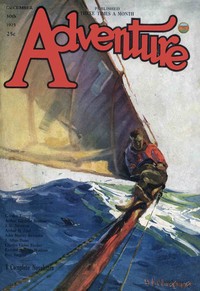
Before opening Nerve enough — Background and Themes, the edition data offers a quick orientation: 7,589 words, 33 min estimated reading time, and 1 detected text section.
The text analysis averages about 19.6 words per sentence, while the detected sections provide another way to judge how the source is divided.
Project Gutenberg metadata also associates the work with “Short stories,” connecting these edition facts with the source record’s subject description.
Explore this collection
These alternatives are selected using recorded categories and estimated reading time.
About 35 minutes
Adventure Picaresque Fiction
7,921 recorded words. 2 minutes difference from this book's estimate.
View Gutenberg source #73604About 36 minutes
Adventure Picaresque Fiction
8,082 recorded words. 3 minutes difference from this book's estimate.
View Gutenberg source #75096About 26 minutes
Adventure Picaresque Fiction
5,822 recorded words. 7 minutes difference from this book's estimate.
View Gutenberg source #67365Search stored excerpts and compare books → Choose by your preferences →
Choices use stored catalog measurements. Estimates vary with reading speed. A shared category is a catalog label, not a claim that two books have the same argument or literary quality.
Search reads excerpt text stored with this catalog and links to its associated Gutenberg record. The connection is stored in the site database; this tool does not recheck that every excerpt is word-for-word identical to that external record. Excerpt search does not cover every chapter and does not verify historical publication dates.
Catalog snapshot checked: 2026-09-25. Coverage: 93 public books, 93 available source excerpts.
Calculated from edition completeness, EPUB availability, text structure and catalogue metadata. Not a user rating.
Total of 100 points, scaled to a 2.5-5.0 range. Editions with an empty description or a missing EPUB file are not scored.
Public-domain source text
The source text is kept in the dedicated reader, separate from this catalogue record and its commentary.
The opening of 'Nerve Enough' introduces the T. M. O. Transportation Co., a fledgling aerial passenger service run by three partners: Jim Tyler, Burt Minster, and Delevan O’Connell. The narrator immediately establishes a tone of wry irony—Del O’Connell’s boast that the company’s initials will become as familiar as “C. O. D.” is undercut within three days when his motor fails, forcing a landing that cracks two struts. The newspaper headline “FALLS THREE THOUSAND FEET; LIVES” misrepresents the incident, yet the public’s fear shrivels their clientele. This early sequence signals that the story will examine the gap between perception and reality in early aviation, and that the pilots’ nerve will be tested not only by mechanical failure but by public opinion.
After the first setback, the partners move to a smaller town, rebuild their reputation, and carry hundreds of passengers safely—until Burt Minster’s test-hop ends in a side-slip that wrecks his plane. The company’s assets shrink to one ancient training-ship, and they become “gipsy fliers,” moving without a fixed base. The narrator’s phrasing—“descended in the world to the low estate of gipsy fliers”—emphasizes the social and economic fall. The pattern of optimism followed by disaster recurs, suggesting that the story’s structure will hinge on repeated tests of nerve and resilience. The excerpts do not reveal whether the company ever stabilizes, but the trajectory so far sets up a rhythm of hope and collapse.
In the later excerpt, the partners face a life-or-death situation: O’Connell is dangling from the plane, unbuckling his harness to sacrifice himself so the ship can be saved. Jim Tyler watches “paralyzed by the horrible fascination,” while Burt Minster acts. Minster leaps from the fuselage, crashes into O’Connell, and they fall together. The description is visceral: “crashed like a plunging bull,” “squeezed out of his chest,” “iron band tightened across his breast.” The parachute opens, and the sudden quiet contrasts with the previous chaos. The dialogue after the rescue—Burt’s casual remark about weight limits, Del’s muttered “That stuff about nerve”—suggests that the story will explore what nerve means in extremis, and how the characters redefine it through action.
Watkins employs a third-person narrator who occasionally steps back to comment wryly, as when explaining that Del “hadn’t fallen an inch” despite the headline. The narration also shifts into the characters’ perspectives during crisis: Jim’s “dry throat framed at last an inarticulate sound,” Burt’s voice “blared in the pilot’s ear.” The prose is economical, favoring action verbs and concrete details—cracked struts, a split ear, a “strained, twisted grin.” The excerpts do not include any interior monologue; instead, the characters’ thoughts are inferred from their actions and sparse dialogue. This narrative style keeps the focus on external events and physical responses, aligning with the story’s theme of nerve as a quality demonstrated under pressure.
Several details recur across the excerpts: the repeated mention of “nerve” in the title and in Del’s final muttered line; the motif of newspaper headlines that distort events; the physicality of flying—motors, struts, harnesses, parachutes. The story’s structure appears to be episodic, moving from one crisis to the next, with the company’s fortunes rising and falling. The excerpts do not reveal the outcome of the parachute descent or the company’s fate, but the final line—“That stuff about nerve, Burt—I’m a”—cuts off, leaving the reader to infer the completion. This abrupt ending in the excerpt may mirror the story’s own conclusion, or it may simply be where the provided text ends. Readers should note that the full story likely continues to explore the consequences of this mid-air rescue.
As you read ‘Nerve Enough,’ pay attention to how Watkins uses the physical details of early aviation—the mechanics of planes, the feel of a parachute opening—to ground the characters’ emotional and moral choices. The story’s title is not merely descriptive but thematic: each crisis forces the pilots to define what nerve means, whether through endurance, sacrifice, or reckless action. The excerpts offer a concentrated sample of the story’s rhythm and voice, but the complete work may develop these ideas further. Let the opening’s ironic tone guide your expectations, and watch for how the narrator’s distance or closeness shifts during moments of danger.
The rain blurred the window while I finished Nerve Enough, that quiet editorial note circling the jumpers’ fear and habit. Watkins’s pilots taught me that bravery is less a shout than a steady breath. Later, rummaging for a dry bookmark, I found a dog-eared copy of Atlantic Narratives: Modern Short Stories — Text and Context, and the same unhurried courage seemed to blink between its pages.
Capture what you thought, learned, and would like to remember.