About 156 minutes
Queer Luck: Poker Stories from the New York Sun — Themes and Context
Science Fiction Utopias
35,725 recorded words. 59 minutes difference from this book's estimate.
View Gutenberg source #57751
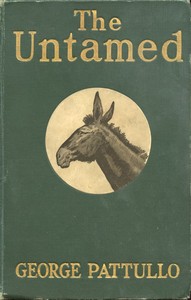
The catalog record for The Untamed: Range Life in the Southwest — Text and Context provides practical reading context through 49,312 words, 3 hr 35 min estimated reading time, and 6 detected text sections.
The text analysis averages about 16.8 words per sentence, while the detected sections provide another way to judge how the source is divided.
Project Gutenberg metadata also associates the work with “Animals -- Fiction,” connecting these edition facts with the source record’s subject description.
Explore this collection
These alternatives are selected using recorded categories and estimated reading time.
About 156 minutes
Science Fiction Utopias
35,725 recorded words. 59 minutes difference from this book's estimate.
View Gutenberg source #57751About 151 minutes
Science Fiction Utopias
34,562 recorded words. 64 minutes difference from this book's estimate.
View Gutenberg source #71872About 93 minutes
Science Fiction Utopias
21,236 recorded words. 122 minutes difference from this book's estimate.
View Gutenberg source #76387Search stored excerpts and compare books → Choose by your preferences →
Choices use stored catalog measurements. Estimates vary with reading speed. A shared category is a catalog label, not a claim that two books have the same argument or literary quality.
Search reads excerpt text stored with this catalog and links to its associated Gutenberg record. The connection is stored in the site database; this tool does not recheck that every excerpt is word-for-word identical to that external record. Excerpt search does not cover every chapter and does not verify historical publication dates.
Catalog snapshot checked: 2026-09-25. Coverage: 93 public books, 93 available source excerpts.
Calculated from edition completeness, EPUB availability, text structure and catalogue metadata. Not a user rating.
Total of 100 points, scaled to a 2.5-5.0 range. Editions with an empty description or a missing EPUB file are not scored.
Public-domain source text
The source text is kept in the dedicated reader, separate from this catalogue record and its commentary.
The nine stories in The Untamed each take a single animal as their focus, from a mule named Sam to a mountain cowhorse called Neutria. The opening tale introduces Ol’ Sam, a mule that raids the cook’s pots and kicks when struck, establishing a tone of wry, unsentimental observation. The animals are not anthropomorphized; they act from appetite, habit, or instinct, and the human characters—cooks, range bosses, cowboys—respond with a mixture of exasperation and grudging respect. The structure of the collection moves through different species, each story building a portrait of a creature’s place in the Southwest landscape, where survival depends on sharp senses and hard-won knowledge.
Across the excerpts, food and the threat of theft appear repeatedly. Ol’ Sam noses into the cook’s pot and later “snake[s] your whole batch right from under your nose.” The wolfhound Shiela, starved after a journey, catches raw meat “with the desperate zest of the famished.” A loafer wolf kills a calf close to headquarters, and the pups in the smithy “leaped and snapped their teeth, and gnawed and raved to be free.” These moments tie the animals’ behavior to a constant, pressing need. The cook Dave’s “perpetual vigil” against Sam’s raids mirrors the larger vigilance required on the range, where every creature must guard its food or lose it. The pattern is not merely anecdotal; it builds a world where hunger drives action and theft is a routine, almost expected, part of life.
The stories shift between the domestic spaces of camp and the untracked wild. Ol’ Sam trots off “up a neighboring rise and presently disappeared from view,” moving from the cook’s fire to the open range. Shiela’s pups, chained in the smithy, bay to be free, and when released they “hurled themselves over” the man who tries to stop them. The wolf pack that raids includes “two fawn-colored wolves like no lobo of the west country,” suggesting a hybrid lineage that blurs the line between dog and wolf. This movement is not just physical; it reflects a tension between the human order of camp—with its meals, cards, and chores—and the untamed pull of the wild. The animals cross that boundary constantly, and the humans must adapt or resist.
The dialogue is marked by a specific, colloquial voice. The cook shouts, “Git your nose out’n that pot. Hi, you flop-eared—I swan, that ol’ mule makes me mad sometimes.” The range boss speaks in clipped, even tones: “It’s your play.” The blacksmith complains, “Anyone kin see they’re more wolf than dog.” This vernacular is not decorative; it defines character and social hierarchy. The cook’s exasperation, the boss’s restraint, the blacksmith’s bluntness—each voice reveals a different relationship to the animals and to the work. The dialogue also carries the rhythm of camp life, where talk is spare and often practical, but can sharpen into argument or dark humor.
The collection is organized by animal, each story named after its subject: “Ol’ Sam,” “The Marauder,” “Corazón,” and so on. This structure uses the animal as a focal point, but the narrative does not stay fixed on the creature alone. The story of Shiela, for example, follows her from arrival at the Tumbling H, through the birth of her pups, to the winter’s hardships and the rumor of a wolf pack that includes her offspring. The animal’s life becomes a thread that draws in the human world—the cook Mit, the boy Oscar, the range boss O’Donnell. By moving from one species to the next, the collection builds a composite picture of the Southwest range, where every creature, human or not, is part of a larger, often brutal, system of interdependence.
Readers will find that the stories reward attention to small details: the way a mule’s kick is described, the specific phrasing of a cowboy’s complaint, the shift from a pup’s play to a wolf’s kill. The collection does not offer a single plot but a series of linked observations, each story adding to a cumulative sense of place. Approach it as a set of portraits rather than a novel, and let the recurring images of hunger, theft, and movement guide your reading.
Reading The Untamed, I kept thinking of the way a familiar story settles into you—quietly, without ceremony. Its mule and coyote felt less like symbols and more like neighbors I’d once known. That same unhurried recognition came back with A collection of short-stories — Reading Companion, as if both books were just old trails meeting at the same dry creekbed.
Create a short personal record of your experience with this book.