About 25 minutes
Reputation — Inside the Classic
Science Fiction Utopias
5,689 recorded words. 5 minutes difference from this book's estimate.
View Gutenberg source #66441
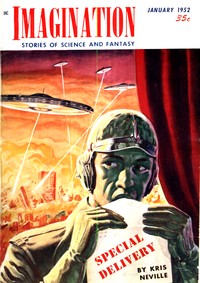
This digital edition of The Most Horrible Story — Background and Themes is described by source-level measurements including 4,551 words, 20 min estimated reading time, and 1 detected text section.
The text analysis averages about 14.7 words per sentence, while the detected sections provide another way to judge how the source is divided.
Project Gutenberg metadata also associates the work with “Short stories,” connecting these edition facts with the source record’s subject description.
Explore this collection
These alternatives are selected using recorded categories and estimated reading time.
About 25 minutes
Science Fiction Utopias
5,689 recorded words. 5 minutes difference from this book's estimate.
View Gutenberg source #66441About 25 minutes
Science Fiction Utopias
5,562 recorded words. 5 minutes difference from this book's estimate.
View Gutenberg source #68555About 26 minutes
Science Fiction Utopias
5,964 recorded words. 6 minutes difference from this book's estimate.
View Gutenberg source #73315Search stored excerpts and compare books → Choose by your preferences →
Choices use stored catalog measurements. Estimates vary with reading speed. A shared category is a catalog label, not a claim that two books have the same argument or literary quality.
Search reads excerpt text stored with this catalog and links to its associated Gutenberg record. The connection is stored in the site database; this tool does not recheck that every excerpt is word-for-word identical to that external record. Excerpt search does not cover every chapter and does not verify historical publication dates.
Catalog snapshot checked: 2026-09-25. Coverage: 93 public books, 93 available source excerpts.
Calculated from edition completeness, EPUB availability, text structure and catalogue metadata. Not a user rating.
Total of 100 points, scaled to a 2.5-5.0 range. Editions with an empty description or a missing EPUB file are not scored.
Public-domain source text
The source text is kept in the dedicated reader, separate from this catalogue record and its commentary.
The story opens with a room described as 'very plain'—four walls, a ceiling, a floor—yet Thompson has never seen it before. This deliberate flatness contrasts with the uncanny details that follow: a candle that burns without shrinking, a pen that never runs dry, and an old man whose hands retrieve objects from 'out of sight' without visible drawers. Jakes builds horror not through gore but through small, accumulating violations of normalcy.
The dialogue is clipped and bureaucratic. The old man asks for Thompson's name and birth date with the efficiency of a clerk, reducing existential dread to paperwork. The phrase 'full-time member' suggests a commitment far beyond a casual book club, and the book itself—bound in human skin, as the narrator notes with the rasp of fingers on the cover—is presented without fanfare, as if such materials are routine.
The setting is deliberately nondescript: 'a very plain room' with gray furniture made of an unidentifiable material. Yet within this ordinary space, impossible things occur. The candle flickers but never changes size; the pen always holds ink. These details are presented without explanation, creating a quiet dissonance. Thompson notices them but does not comment, as if accepting the strange is part of the club's protocol. Jakes uses this technique to make the reader complicit in the character's passive observation.
The old man's movements are similarly odd: his hands 'dipped down' and reappeared with objects, but no drawers slid open. The action is described as 'some kind of game,' hinting at a ritualistic or supernatural mechanism. The room's plainness amplifies the strangeness—there is no clutter to distract from the few, potent anomalies.
The conversation between Thompson and the old man is terse and procedural. The old man's questions—'Name.' 'Born.'—are commands, not inquiries. Thompson's responses are hesitant: 'Thompson thought a minute' before giving his birth date. The old man's laugh is described as 'chiding a small and extremely foolish child,' establishing a power imbalance. When Thompson asks about classic horror titles like Dracula or Frankenstein, the old man dismisses them as 'second-rate products,' implying the club offers something far worse.
Jakes avoids melodrama. The horror is in the understatement: the old man 'seemed annoyed' by Thompson's question about necessity. The dialogue never raises its voice, yet the stakes escalate through implication. The phrase 'actual, stark horror' is delivered flatly, making it more chilling than any scream.
The book that appears on the desk is 'thin, roughly a foot square,' with a whitish cover. The old man's fingers 'rasped on the cover,' and the narrator clarifies: 'Human skin.' This revelation is stark and immediate, without buildup. The book is not described as old or ornate—it is simply a functional object made of human material. The matter-of-fact tone makes the horror more visceral.
Thompson's earlier request for classic horror stories is undercut by this object. The club deals not in fiction but in something tangible and grotesque. The book's size and thinness suggest it contains a single story—perhaps the 'most horrible' one promised by the title. Jakes leaves the contents undescribed, letting the reader's imagination fill the void.
The story is told in third person, closely following Thompson's perspective. His observations are limited to what he sees and hears; he does not speculate or interpret. This restraint creates a sense of helplessness. When the old man's hands move 'out of sight,' the reader knows only what Thompson knows. The candle's constancy is noted but not explained.
Jakes also uses direct address in the opening line: 'Do you think a story could ever make you shudder with a horror too great to bear?' This question positions the reader as a potential member of the club, complicit in the desire for horror. The narrative then retreats to Thompson's experience, but the question lingers, suggesting that the act of reading itself is a form of membership.
Jakes's story is a study in restraint: horror emerges from the gap between what is said and what is implied. Readers should attend to the small, repeated details—the unchanging candle, the pen that never needs refilling—as clues to the story's logic. The club's rules are never fully explained, and the ending (not included here) may reward careful attention to Thompson's final reactions. Approach this tale as a puzzle of atmosphere rather than a straightforward narrative.
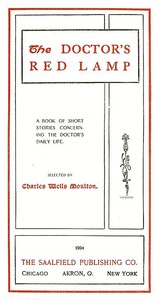
The candle that never shrinks reminded me of my uncle’s study, where a worn copy of The Doctor’s Red Lamp sat beside his chair, its pages soft as cloth. I never finished it, but I remember the quiet dread of a house call at midnight, how the ordinary became uneasy. The Doctor's Red Lamp A Book of Short Stories Concerning the Doctor's Daily Life — Inside the Classic gave me that same hush, like a held breath waiting to break.
Use these questions to collect your thoughts before moving on.