About 25 minutes
Reputation — Inside the Classic
Science Fiction Utopias
5,689 recorded words. 0 minutes difference from this book's estimate.
View Gutenberg source #66441
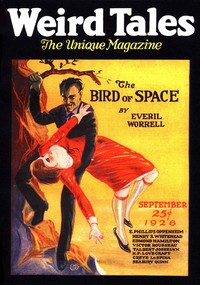
This digital edition of The night wire — Themes and Context is described by source-level measurements including 5,562 words, 25 min estimated reading time, and 1 detected text section.
The text analysis averages about 17.7 words per sentence, while the detected sections provide another way to judge how the source is divided.
Project Gutenberg metadata also associates the work with “Short stories,” connecting these edition facts with the source record’s subject description.
Explore this collection
These alternatives are selected using recorded categories and estimated reading time.
About 25 minutes
Science Fiction Utopias
5,689 recorded words. 0 minutes difference from this book's estimate.
View Gutenberg source #66441About 26 minutes
Science Fiction Utopias
5,964 recorded words. 1 minutes difference from this book's estimate.
View Gutenberg source #73315About 29 minutes
Science Fiction Utopias
6,597 recorded words. 4 minutes difference from this book's estimate.
View Gutenberg source #74150Search stored excerpts and compare books → Choose by your preferences →
Choices use stored catalog measurements. Estimates vary with reading speed. A shared category is a catalog label, not a claim that two books have the same argument or literary quality.
Search reads excerpt text stored with this catalog and links to its associated Gutenberg record. The connection is stored in the site database; this tool does not recheck that every excerpt is word-for-word identical to that external record. Excerpt search does not cover every chapter and does not verify historical publication dates.
Catalog snapshot checked: 2026-09-25. Coverage: 93 public books, 93 available source excerpts.
Calculated from edition completeness, EPUB availability, text structure and catalogue metadata. Not a user rating.
Total of 100 points, scaled to a 2.5-5.0 range. Editions with an empty description or a missing EPUB file are not scored.
Public-domain source text
The source text is kept in the dedicated reader, separate from this catalogue record and its commentary.
The story opens with a flash bulletin: “Ambassador Holliwell died here today.” This is not the horror itself but the routine backdrop of a night wire operator’s world. The narrator, a night manager in an unnamed western seaport, describes the job as sitting “up here on the top floor of a skyscraper and listen[ing] in to the whispers of a civilization.” The prose establishes a weary, almost hypnotic rhythm—fires, disasters, suicides flow in while operators doze and tap typewriters with one finger. The horror emerges not from the news but from a break in that routine: operator John Morgan, a “double” man who can work two instruments at once, complains of feeling tired. It is the first time in three years he has said a word about himself.
Arnold’s characterization of John Morgan is built around mechanical precision. Morgan is described as a “wizard, a mechanical automatic wizard which functioned marvelously but was without imagination.” He is one of only three men the narrator has known who could consistently handle two instruments and type on different typewriters simultaneously, “hour after hour, and never make a mistake.” This language reduces Morgan to a flawless component of the news system. The story’s horror depends on this dehumanization: when Morgan begins to show human frailty—fatigue, a question about the air—it signals a malfunction in the machine. The narrator’s own voice is similarly flat and procedural, reporting events with the same detachment he uses for casualty lists. The reader is placed inside a consciousness that has been trained to process catastrophe without emotion, making the eventual breakdown more unsettling.
The setting is established through sensory details that evoke isolation and monotony. The office is on the top floor of a skyscraper; the time is “the quiet hours between 2 and 4.” The narrator notes that “the receiving operators doze over their sounders and the news comes in.” The sound of the typewriter is a constant “tap, tap.” Arnold uses repetition to create a lulling effect: “Fires and disasters and suicides. Murders, crowds, catastrophes.” The world beyond the wire is reduced to a stream of distant calamities. When Morgan opens a second wire, the narrator observes it without alarm—it is simply part of the job. The story’s tension builds from the contrast between this mundane, repetitive environment and the inexplicable event that disrupts it. The narrator’s own drowsiness (“I was nodding over reports at my desk”) mirrors the reader’s potential complacency, making the intrusion of the supernatural more jarring.
Arnold’s word choices subtly shift as the story progresses. Early language is functional: “I handle the night manager’s desk,” “we were running only one wire.” But as Morgan’s behavior changes, the vocabulary becomes more visceral. Morgan says the room feels “close,” and the narrator offers to open a window—a mundane response that underscores his failure to recognize the threat. The story’s climax is described in fragments, with the narrator’s sentences becoming shorter and more disjointed. The final line, “as that killed John Morgan will forever remain a mystery,” is stark and conclusive. Arnold avoids explicit description of the horror, relying instead on the narrator’s incomplete understanding. This restraint forces the reader to imagine the unseen, a technique more effective than graphic detail. The story’s power lies in what is not said: the wire transmits something that cannot be fully reported.
The narrator is not omniscient; he is a tired night manager who admits, “I haven’t got over it yet.” He frames the story as a confession, but his own reliability is questionable. He describes Morgan as “without imagination,” yet the story hinges on an event that defies rational explanation. The narrator’s insistence on the mundane—the time, the routine, the mechanical skill of his operator—may be a way of imposing order on chaos. He never claims to understand what happened; he only reports what he saw and heard. This limited perspective is crucial: the reader knows only what the narrator knows, and that knowledge is incomplete. The story’s ambiguity is not a flaw but a deliberate choice. Arnold uses the first-person account to create a sense of authenticity while leaving the central horror unexplained. The reader is left with the same unease as the narrator, unable to close the case.
This story, originally published in Weird Tales in 1926, is a compact example of early weird fiction that relies on atmosphere and suggestion rather than explicit terror. Readers should pay attention to the rhythm of the prose and the way Arnold uses the technical details of telegraphy to ground the supernatural. The story rewards those who read slowly, noticing how the narrator’s voice shifts from professional detachment to haunted recollection. It is a brief but effective study in how the familiar can become strange.
Reading The Night Wire again, that sense of dread arriving in ordinary static—it made me think of another story’s quiet unease, how a familiar voice can turn strange. The distance between what’s said and what’s heard feels almost shared. I sat with that for a while, remembering Reputation — Inside the Classic, and how it lingers in the same pale, unsettled light.
Use these questions to collect your thoughts before moving on.