About 577 minutes
The Beckoning Hand, and Other Stories — Themes and Context
Science Fiction Utopias
132,598 recorded words. 1594 minutes difference from this book's estimate.
View Gutenberg source #38531
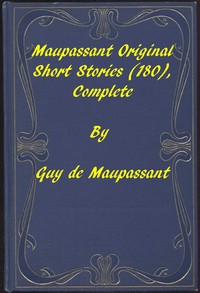
The source record for Complete Original Short Stories of Guy De Maupassant — Text and Context measures this digital text at 499,218 words, 36 hr 11 min estimated reading time, and 62 detected text sections.
The text analysis averages about 18.0 words per sentence, while the detected sections provide another way to judge how the source is divided.
Project Gutenberg metadata also associates the work with “Short stories, French -- Translations into English,” connecting these edition facts with the source record’s subject description.
Explore this collection
These alternatives are selected using recorded categories and estimated reading time.
About 577 minutes
Science Fiction Utopias
132,598 recorded words. 1594 minutes difference from this book's estimate.
View Gutenberg source #38531About 561 minutes
Science Fiction Utopias
128,886 recorded words. 1610 minutes difference from this book's estimate.
View Gutenberg source #32845About 516 minutes
Science Fiction Utopias
118,621 recorded words. 1655 minutes difference from this book's estimate.
View Gutenberg source #67985Search stored excerpts and compare books → Choose by your preferences →
Choices use stored catalog measurements. Estimates vary with reading speed. A shared category is a catalog label, not a claim that two books have the same argument or literary quality.
Search reads excerpt text stored with this catalog and links to its associated Gutenberg record. The connection is stored in the site database; this tool does not recheck that every excerpt is word-for-word identical to that external record. Excerpt search does not cover every chapter and does not verify historical publication dates.
Catalog snapshot checked: 2026-09-25. Coverage: 93 public books, 93 available source excerpts.
Calculated from edition completeness, EPUB availability, text structure and catalogue metadata. Not a user rating.
Total of 100 points, scaled to a 2.5-5.0 range. Editions with an empty description or a missing EPUB file are not scored.
Public-domain source text
The source text is kept in the dedicated reader, separate from this catalogue record and its commentary.
The collection opens with a table of contents listing over 260 stories arranged alphabetically and by volume, immediately signaling the scale of Maupassant's output. The first excerpt, from "Madame Rondoli," introduces a narrator who returns to Genoa seeking a woman he met the previous year, only to be offered her sister Carlotta instead. The mother's matter-of-fact substitution—"This is Francesca's Frenchman... I told him that you would go with him"—establishes a tone of comic detachment and economic pragmatism that pervades many of these tales.
The opening excerpt from "Madame Rondoli" sets a pattern: a traveler expecting one companion is smoothly redirected to another. The mother's dialogue—"Would you not like Carlotta to go with you?"—treats the swap as natural, while the narrator's passive acceptance hints at Maupassant's interest in characters who drift into situations. The detail that Carlotta wears "an old dress of her mother's" and later a "striking, peculiar manner" suggests a household where resources are stretched and daughters are assets. This story, placed early in the collection, primes the reader for tales where desire and commerce intertwine.
In "The False Gems," the excerpt shows Monsieur Lantin meeting a young woman at a reception and falling "head over heels in love." The story's title hints at deception, but the opening lines focus on the ordinary circumstances of their meeting—a tax collector's daughter, a widowed mother. Maupassant withholds judgment, letting the reader infer the tension between appearance and reality. The phrase "head over heels" is the only emotional flourish; the rest is factual, a technique that recurs across the collection. Readers should note how Maupassant builds irony through understatement, not explicit commentary.
Across the excerpts, a structural pattern emerges: a brief setup, a mundane detail, then a quiet reversal. In "Madame Rondoli," the narrator's final thought—"I cannot help remembering... that Madame Rondoli has two more daughters"—turns a sentimental memory into a wry joke. The collection's alphabetical arrangement means stories are not grouped by theme, so the reader encounters these twists unpredictably. Pay attention to how Maupassant uses dialogue to reveal character: the mother's practical instructions, the daughter's compliance. These small exchanges carry the weight of social commentary.
The title page lists four translators—A. E. Henderson, Albert Cohn McMaster, Louise Charlotte Garstin Quesada, and others—yet the excerpts share a restrained, slightly formal English. Phrases like "I was obliged, however, to drink a glass of her sirup" and "she expatiated on the good qualities" suggest a Victorian-era translation style. The consistency may stem from editorial oversight, but readers should be aware that the original French rhythms are filtered through these choices. The stories' brevity (many under ten pages) means each word counts; the translations preserve Maupassant's economy even when idiom shifts.
This edition offers a rare chance to trace Maupassant's development across hundreds of stories. Because the contents are listed alphabetically, a first-time reader might start with a volume or a well-known title like "Boule de Suif" (Volume I) rather than reading straight through. The excerpts suggest that even minor stories reward attention to their opening lines, where Maupassant often plants the seed of his irony.
There’s something so familiar in Maupassant’s restless endings, lives turning on a single misread glance. I often feel that quiet ache long after closing the book, the way his characters never quite get what they expected. That same sense of wandering companionship lingers with A collection of short-stories — Reading Companion, like a friend who simply sits with you in the afterglow. It feels less like reading, more like remembering.
Build a private reading journal entry for this title.