About 506 minutes
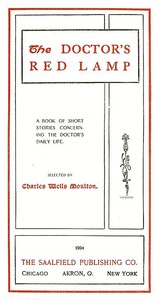
The Doctor's Red Lamp A Book of Short Stories Concerning the Doctor's Daily Life — Inside the Classic
Science Fiction Utopias
116,296 recorded words. 10 minutes difference from this book's estimate.
View Gutenberg source #47789
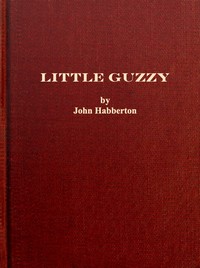
For Little Guzzy, and other stories — Themes and Context, the stored edition analysis reports 118,621 words, 8 hr 36 min estimated reading time, and 33 detected text sections.
The text analysis averages about 22.1 words per sentence, while the detected sections provide another way to judge how the source is divided.
Project Gutenberg metadata also associates the work with “Short stories, American,” connecting these edition facts with the source record’s subject description.
Explore this collection
These alternatives are selected using recorded categories and estimated reading time.
About 506 minutes
Science Fiction Utopias
116,296 recorded words. 10 minutes difference from this book's estimate.
View Gutenberg source #47789About 561 minutes
Science Fiction Utopias
128,886 recorded words. 45 minutes difference from this book's estimate.
View Gutenberg source #32845About 577 minutes
Science Fiction Utopias
132,598 recorded words. 61 minutes difference from this book's estimate.
View Gutenberg source #38531Search stored excerpts and compare books → Choose by your preferences →
Choices use stored catalog measurements. Estimates vary with reading speed. A shared category is a catalog label, not a claim that two books have the same argument or literary quality.
Search reads excerpt text stored with this catalog and links to its associated Gutenberg record. The connection is stored in the site database; this tool does not recheck that every excerpt is word-for-word identical to that external record. Excerpt search does not cover every chapter and does not verify historical publication dates.
Catalog snapshot checked: 2026-09-25. Coverage: 93 public books, 93 available source excerpts.
Calculated from edition completeness, EPUB availability, text structure and catalogue metadata. Not a user rating.
Total of 100 points, scaled to a 2.5-5.0 range. Editions with an empty description or a missing EPUB file are not scored.
Public-domain source text
The source text is kept in the dedicated reader, separate from this catalogue record and its commentary.
The opening pages of Little Guzzy, and other stories advertise it as a book by the author of Helen’s Babies, promising more of the comic misadventures of Budge and Toddie. Yet the excerpt from the story “The Schoolteacher at Bottle Flat” presents a very different world: a California mining camp where men kill over a saloon, a boy called Pet is orphaned when his father is shot, and the dead man is eulogized with the toast “here’s corpse—corpse is the best-looking man in camp.” The catalog classifies this volume as Science Fiction & Utopias, but the surviving text contains no speculative or futuristic elements—only rough frontier realism and sudden, sentimental violence.
The excerpt from “The Schoolteacher at Bottle Flat” is dense with the slang and rhythms of 1870s mining life. Men are identified by nicknames like “the doubter,” “the colonel,” and “Grump”; they “located claims,” “cut and beaten a trail,” and “pounded” a boy. The dialogue is terse and colloquial: “They’ve fit!” gasps one character, and the dying man’s last words are “I’m yer dad ; give this to yer mar.” Violence erupts abruptly—a revolver shot, a man bleeding on the ground—and is followed by a communal ritual of burial, with the men donating a white shirt for a shroud and each throwing a shovelful of dirt. The tone shifts from brutal to maudlin when Pet weeps and “was joined by the whole party.” This blend of coarse action and tearful sentiment is characteristic of the local-color fiction of the period.
The book’s front matter aggressively markets Habberton’s reputation for humor, quoting a newspaper that calls him “the author of ‘Helen’s Babies’” and promises “the further haps and mishaps of those irresistible youths.” A full-page advertisement boasts of “250,000 copies” sold and calls the new volume “the best book this author has put forth.” Yet the only substantial story excerpt available—the one from “The Schoolteacher at Bottle Flat”—contains no comedy. Instead, it features a child beaten by a drunk, a father shot dead, and a camp full of rough men performing a makeshift funeral. The catalog’s “Science Fiction & Utopias” label is even more discordant; nothing in the excerpt suggests a speculative setting. Readers expecting the lighthearted domestic humor of Helen’s Babies will find a markedly different register here.
The Project Gutenberg record indicates 33 text sections and a total word count of 118,621, but only two story openings are included in the excerpts: “The Schoolteacher at Bottle Flat” and “Wardelow’s Boy.” The latter begins with a sardonic description of a failed land-development scheme in “New Boston,” a town that “has once been the most promising of the growing cities of the West” before its promoters’ promises unravel. This second excerpt is cut off early, so it is impossible to know whether it returns to the mining-camp milieu or introduces a different setting. The volume’s title story, “Little Guzzy,” is not excerpted at all. Without the full text, one cannot assess how the collection balances its advertised humor with the grimness visible in the available pages, nor whether any story actually ventures into science fiction or utopian themes.
Because the excerpts cover only two stories and break off before their conclusions, readers should approach the catalog’s genre classification with caution. The available evidence points to a collection of Western local-color fiction, heavy on dialect, sudden death, and sentimental resolution, rather than to any speculative or utopian content. A full reading would be needed to determine whether the other stories—especially the title piece—modulate this tone or introduce the comic domesticity the advertisements promise.
I found myself turning back to Habberton's hardscrabble camp stories, where a gunshot could end a sentence mid-thought, and yet the tenderness always broke through anyway. It made me wonder how these heartbroken characters rebuild. Then I remembered Reputation — Inside the Classic, which holds a similar quiet ache between its covers. Strange, how old wounds keep finding new homes.
Create a short personal record of your experience with this book.